










NJEMSTF PRES SAYS ORGANIZATION DOES NOT EXIST BECAUSE OF TERRORISM


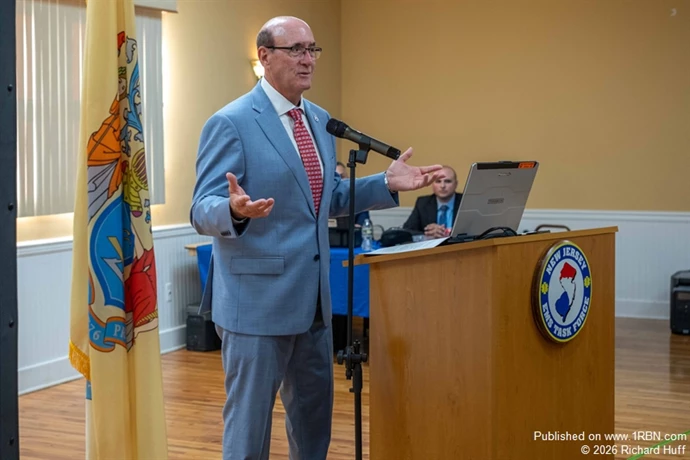
Photo by Richard HuffThe New Jersey EMS Task Force has been an integral part of the planning for the upcoming FIFA World Cup tournament for more than a year, and the event, while significant in scope, does not define the organization, President Michael J. Bascom told attendees at the NJEMSTF’s annual meeting.
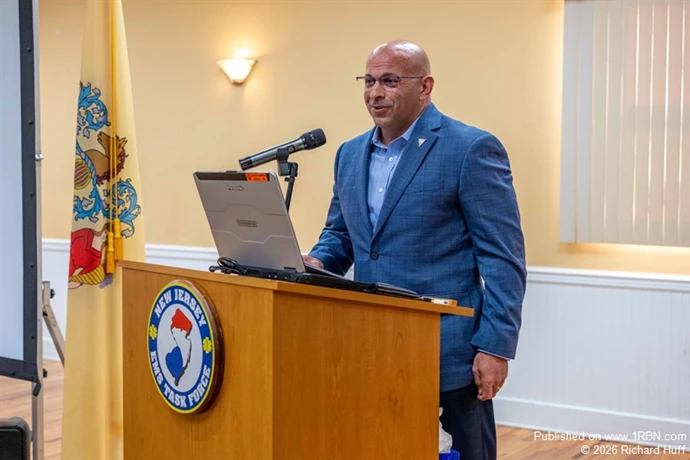
Photo by Richard HuffNew Jersey State Police Lt. Colonel Douglas Lemanowicz
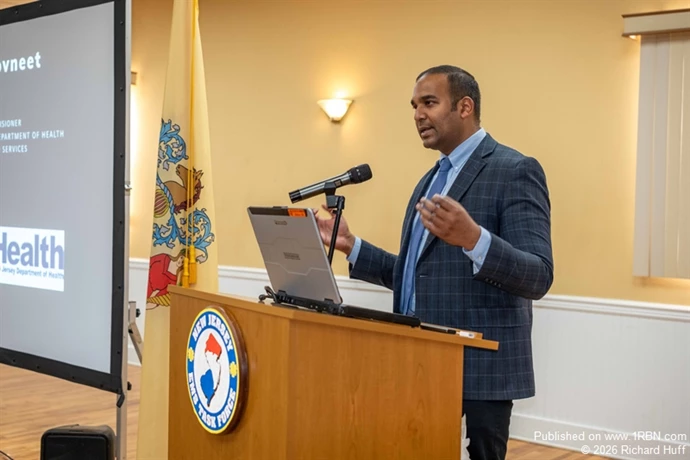
Photo by Richard Huffincluded NJDOH Deputy Commissioner for Public Health Services Dr. Novneet Sahu
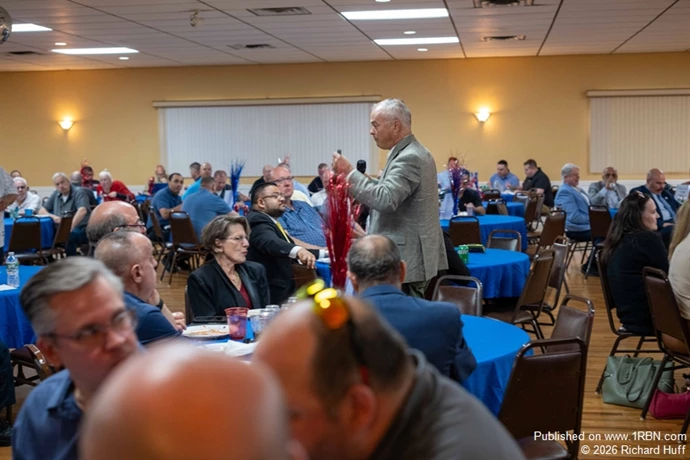
Photo by Richard HuffCooper University Health’s Dr. John Chovanes delivered the night’s keynote address on advances in trauma responses.
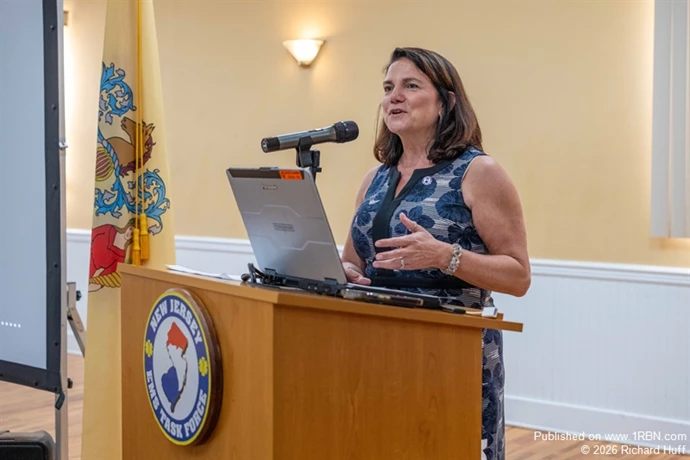
Photo by Richard HuffJennifer McCarthy
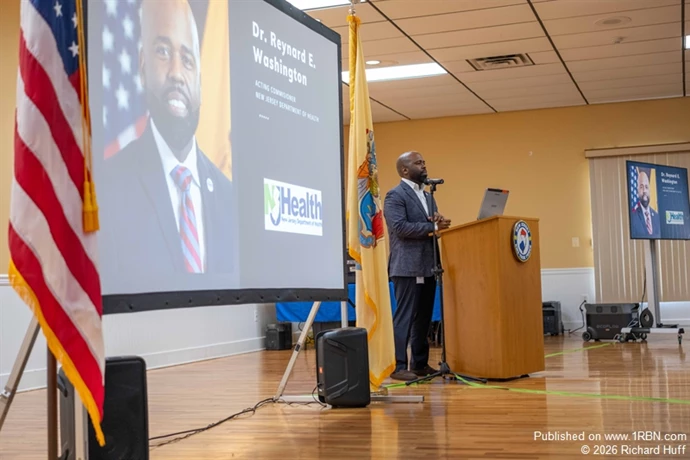
Photo by Richard HuffDr. Reynard E. Washington, Acting Commissioner of the NJ Department of Health,
The New Jersey EMS Task Force has been an integral part of the planning for the upcoming FIFA World Cup tournament for more than a year, and the event, while significant in scope, does not define the organization, President Michael J. Bascom told attendees at the NJEMSTF’s annual meeting.
“It requires our discipline, obviously, our commitment, and teamwork at every level within our group, whether you're employed, or deployed, whether you're engaging an area, or whether you're working from home or whether you are supporting us in between sessions, your involvement, your teamwork is critical to our success,” Bascom told the 150 members in attendance at the Hamilton Fire House in Neptune, NJ on May 19. “So while FIFA may define this year, it doesn't define who we are, because we do so much more, and we never stopped doing what we regularly do. ”
Bascom noted that the groundwork for creating the NJ EMS Task Force, a statewide emergency services organization serving all 21 counties and beyond, began 25 years ago this fall. The organization's formation began in earnest in the wake of the Sept. 11, 2001, terrorist attacks and has grown to include 225 members from 60 career and volunteer host agencies throughout the state who respond to large-scale man-made and natural disasters.
“We bring capabilities that nobody else can, and nobody else should have to bring,” Bascom said. “We have assets that are designed for the worst days, and we bring, more importantly, highly skilled, highly trained responders into situations that are beyond the scope of what our regular, and I don't mean this to be belittling, but beyond what any normal 911 EMS provider would be expected to provide.”
Bascom thanked the New Jersey Department of Health and its partners for their support. Attendees included NJDOH Deputy Commissioner for Public Health Services Dr. Novneet Sahu, Assistant Commissioner Dana Johnson, and Candace Gardner, director of the Department of Health’s Office of Emergency Medical Services.
Also in attendance was Dr. Reynard E. Washington, Acting Commissioner of the NJ Department of Health, who thanked members of the NJ EMS Task Force, and said after a few weeks on the job, he “quickly understood the incredible value that the work you all do brings to the stage, not just in times of emergency, but when we are getting prepared for what's to come and events that might be happening.”
Cooper University Health’s Dr. John Chovanes delivered the night’s keynote address on advances in trauma responses.
In 2025 and into 2026, the NJ EMS Task Force has responded to multiple assisted living facility evacuations, supported several wildfire responses, and helped hospitals and other facilities avoid evacuations by providing necessary support equipment and trained staff. All along, the team has done this while planning for the World Cup and the USA 250 celebrations, while preparing and updating statewide emergency plans.
New Jersey State Police Lt. Colonel Douglas Lemanowicz noted the lives the NJEMSTF touched through mass disasters such as Superstorm Sandy and others, “that's communities held together, when they might otherwise have come apart.”
Lemanowicz highlighted the partnership between the NJSP and the NJEMSTF, including their work together in the aftermath of Hurricanes Maria and Ida in the U.S. Virgin Islands.
“It wasn't just two organizations that deployed. It was a unified team operating side by side under some of the most demanding conditions imaginable,” he said. “It would have been easy to work at each other instead of with each other. But that didn't happen because relationships built before an incident determined success during the incident. We don't rise to the occasion. We fall back to our training in our partnerships. So looking ahead, FIFA is not the finish line. It's a milestone.”
Pointing to the upcoming World Cup events, Lemanowicz said that “the billions of people who tune into the World Cup will see the goals scored. The fan celebrations and the tournament. They will not see you. They won't see the planning, the long hours, the quiet work that makes a massive event feel seamless. But in emergency management, success is often invisible. We do our jobs right, nothing happens. And that invisible success is the hardest kind to achieve, and the most important kind there is.”
Throughout the evening, Bascom, Vice President Jennifer McCarthy, and others stressed the ongoing need for sustainable funding to keep the NJEMSTF mission ready. The organization operates on donations and funding from the NJ Department of Health and other grants, but those funds fall short of maintaining the team’s fleet of specialty response equipment, which is found nowhere else in the state.
Bascom, in discussing the formation of the NJ EMS Task Force decades ago, noted its importance to the state.
“While our growth was accelerated in the wake of a national tragedy, we did not define ourselves by that moment,” Bascom said. “We do not exist because of terrorism. It exists because of preparedness. Because of foresight, and because a group of professionals, some of you are in the room, who came from all different parts of the state, and all their types of systems recognized the need. … What started as an idea became a mission. What became a mission is now a model. And it's a model that you continue to build upon every single day. Today, we stand as a national model. A model that's been copied is in many other states.”
No information from the author.